(817) 277-5341


 All Articles
If you have a health savings account or flexible spending account, the end of the year arrives faster than most of us expect. At our office in Arlington, we hear the same questions every fall: what can these dollars actually pay for, and how do we use them before the calendar resets? This guide covers the dental financing options worth understanding right now, what HSA and FSA funds generally can and cannot cover, and how to plan care before January.
Nothing here replaces advice from your plan administrator or employer. It is meant to help you walk into that conversation, and into ours, with better questions.
Why HSA and FSA dollars are on people's minds
A recent survey is part of the reason. In an October 8, 2026 report by Olivia Anderson on ADA News, the Consumer Healthcare Products Association said its survey, released Oct. 7, found that 83% of HSA and FSA account holders would use their funds for everyday oral care products, such as toothpaste, toothbrushes, floss and mouthwash, if those products were eligible. Interest was higher among account holders with children under 18 (91%) and among those ages 18 to 49 (89%).
The same survey found that some people are feeling the squeeze. Fourteen percent reported buying oral care products less often, and another 14% said they had switched to lower-cost brands over the past year. We see a version of that in the chair, too: people care about their teeth, and cost shapes how they care for them.
What current federal law says about dental spending
Here is the part that surprises people. Under current federal law, HSA and FSA funds can be used for a range of healthcare expenses, including over-the-counter medications and health supplies. But everyday oral care products such as toothbrushes, toothpaste, mouthwash and floss generally are not eligible, according to the same report.
A bipartisan bill, the Oral Health Products Inclusion Act (H.R. 1219), would expand eligibility to include certain everyday oral care products. It is not law today, so please do not plan your year-end spending around it. The American Dental Association has said it supports this kind of legislation, and you can follow its work on the ADA's advocacy page.
What about professional dental care? The IRS explains in Publication 502 which dental expenses count as medical expenses, and it notes that purely cosmetic procedures, including teeth whitening, generally do not qualify. In practical terms:
- Exams, cleanings, fillings, and treatment of gum disease are typically the kinds of care people use these funds for.
- Restorative work, such as a crown that repairs a damaged tooth, is often treated differently from an elective cosmetic procedure, though your plan administrator makes the final call.
- Treatments done mainly to change appearance, such as whitening or veneers for aesthetic reasons, may not be eligible. Always confirm before you pay.
HSA vs. FSA: the basics for dental patients
The two accounts sound alike but behave differently, and the differences matter at year-end. The IRS covers both in Publication 969, a neutral reference worth bookmarking.
Health savings accounts
An HSA is tied to a qualifying high-deductible health plan, and the money generally stays yours. Unused funds typically roll over from year to year, so there is less pressure to spend by December 31. The balance is most useful when you know what you plan to use it for.
Flexible spending accounts
An FSA is set up through an employer, and the rules about unused money vary by plan. Some plans allow a short grace period or a limited carryover, and some do not. If you work for a school, a hospital, or the university, your benefits office can tell you what your plan allows and when claims are due. Do not assume; ask.
Why prevention pays
The survey also found that 88% of respondents recognized that oral health can affect overall health, and 91% agreed that caring for teeth and gums can help prevent chronic and costly health problems later in life.
For our patients, prevention looks like regular comprehensive exams, professional cleanings, and, for people with a history of gum disease, periodontal maintenance on the schedule we recommend. Catching a small cavity or early gum changes is usually simpler, and less expensive, than treating a problem after it has grown. If you have benefits or account funds left, preventive visits are often the most straightforward way to put them to work.
How dental financing options work: the main categories
When people search for dental financing options, they are often really asking how to spread out or soften the cost of care. Most choices fall into a few general categories, and many patients combine more than one:
- Dental insurance: Plans typically have annual maximums, deductibles, and different coverage levels for preventive, restorative, and cosmetic care.
- HSA or FSA funds: These tax-advantaged accounts are one of the most common dental financing options for eligible expenses, subject to the rules above.
- Third-party patient financing: Outside lenders, including medical credit cards and installment-style loans, let you pay over time. Approval and terms depend on the lender.
- In-house membership plans: Offered by some practices for patients without insurance, these bundle routine care into a predictable yearly arrangement.
- Phased treatment: Spreading a treatment plan across visits, or across benefit years, can make the total more manageable.
If you are considering a loan or card, compare the interest rate, whether there is a promotional period and what happens when it ends, any fees, and the total you will pay over time. The Consumer Financial Protection Bureau publishes consumer resources on medical credit cards and financing that are worth reading before you sign anything. Never feel pressured to decide in the chair.
Dental financing options to plan before January in Arlington
Most dental insurance plans reset on a calendar-year basis, so unused annual maximums typically do not carry over. Many Arlington and DFW employers run benefits on the same January-to-December cycle. If you have been postponing care, late fall is the time to look at the whole picture.
Here are questions worth asking before you book:
- How much of my annual dental maximum have I used so far?
- When does my FSA deadline fall, and does my plan offer a grace period or carryover?
- Is the treatment I am considering restorative, preventive, or cosmetic, and how does my plan classify it?
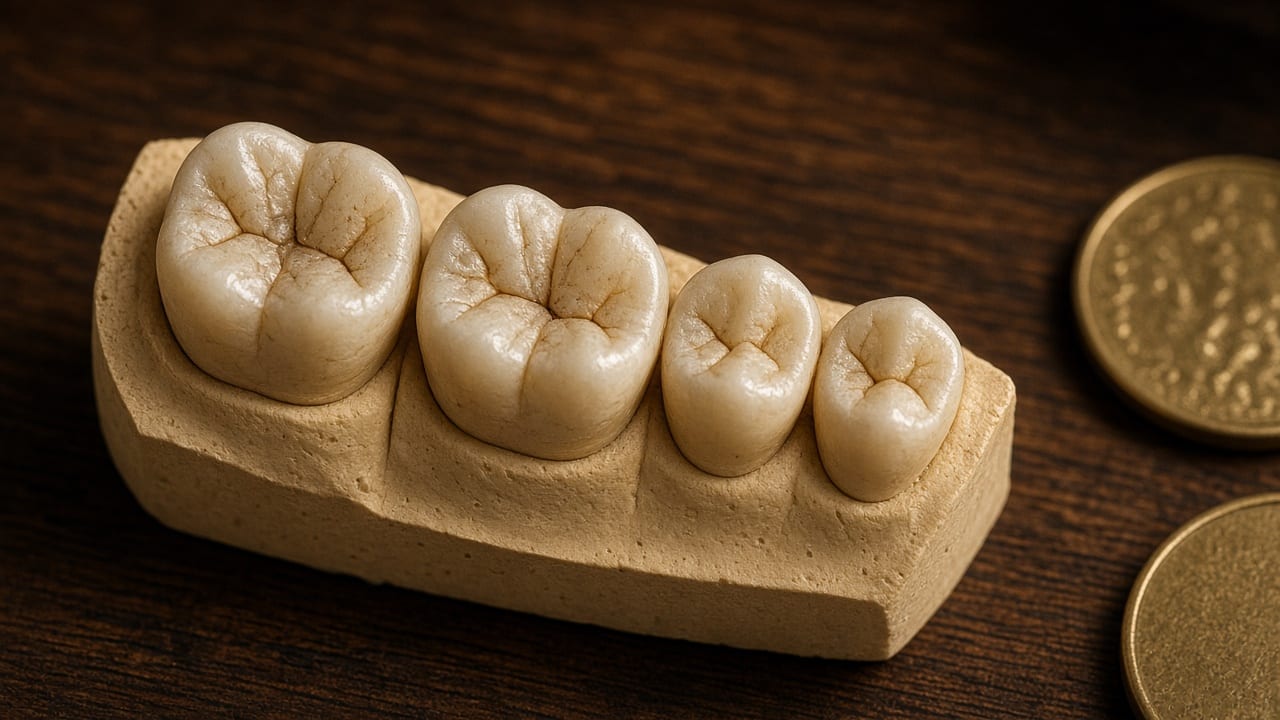
Sequencing is something we can help with. Someone who needs a crown on a cracked molar and also wants whitening before holiday family photos might handle the crown first, since it protects the tooth, then plan the whitening around the remaining budget. Our same-day ceramic crowns are designed and milled in one visit, which helps when your calendar is full heading into the holidays.
If a veneer consultation is on your wish list, a conversation now lets you understand timing, cost, and what is realistic. Veneers are a custom process, and we would rather you have a clear plan than feel rushed.
If you don't have insurance or have limited benefits
Not everyone has an employer plan, and many benefits do not stretch far. We see patients from Downtown Arlington, the UT Arlington campus area, and families driving in from Fort Worth, Grand Prairie, and Mansfield, and a good share of them pay largely out of pocket. You are not alone, and we will never judge your situation. Dr. Sarah Esmail and our team will walk you through an itemized estimate before any treatment begins.
Here is how our office helps:
- Insurance: We accept most dental insurance and can explain how your benefits are likely to apply. Our insurance and financing page has more detail.
- Third-party financing: For larger treatment, we offer third-party financing. Read the terms carefully and ask us anything that is unclear.
- In-house membership plan: For patients without insurance, our membership plan is designed to make routine care more predictable.
These options can work together. A patient might use HSA or FSA funds for eligible care and a membership or financing for the rest. We can help you sort out which is which, though your plan administrator has the final word on eligibility.
Questions to ask any dentist's office about cost
Whether you choose our practice or another, a good office should be glad to talk about money. Consider asking:
- Can I get a written estimate before treatment begins?
- Will my itemized receipt work for HSA or FSA reimbursement?
- What happens if my treatment spans two visits and the year changes in between?
Keep your receipts and itemized statements, since your plan administrator may ask for them.
If you are searching for a dentist near Downtown Arlington, you can find our office at 1009 W Mitchell St, Suite A, on Google Maps, Apple Maps, and Yelp. Looking us up there is a good way to see our location, read reviews from neighbors, and get directions from Interstate 30.
Frequently asked questions
Can I use my HSA or FSA at a dentist near Arlington?
Generally, yes, for eligible dental expenses. Many people use these accounts for exams, cleanings, and treatment of dental disease, but eligibility depends on the treatment and on your plan. Elective cosmetic procedures such as whitening may not qualify, so confirm with your plan administrator before paying.
Can I buy toothpaste, floss, or mouthwash with HSA or FSA funds?
Under current federal law, everyday oral care products like these generally are not eligible. The Oral Health Products Inclusion Act (H.R. 1219) would change that, but it has not become law. The ADA's advocacy page is a good place to watch for updates.
What if I miss my FSA deadline or use up my insurance benefits?
FSA rules vary by employer plan, and unused insurance benefits usually do not carry over to the new year, so check your deadlines now. If you do miss them, we can talk through financing, our membership plan, or phasing treatment into the new benefit year so care does not stall.
Plan your care before the year ends
If you are in Arlington, Pantego, Kennedale, or anywhere in the Mid-Cities and want help making a plan before the year ends, we would be glad to hear from you. Our team can review your benefits, talk through timing and costs for crowns, whitening, or a veneer consultation, and answer your questions without pressure or judgment. Contact us to book a consultation and start the new year with a plan you feel good about.